WSU community,

This summer we are preparing for a new fall semester – one for which we are excited for positive and exciting changes and growth. One area of growth and change that we are pleased to share is being led by Wichita State University’s Office of Institutional Equity and Compliance (OIEC). Beginning in the fall, OIEC will be working on a number of initiatives to increase education and awareness of Title IX and campus safety, and to expand the accessibility and transparency of OIEC resources and processes.  

One of these initiatives that we are excited to implement is the Sexual Assault Prevention training requirement for all WSU students, faculty and staff. A recent survey aimed at gauging Title IX awareness and prevention indicated that 70% of employees and 63% of students feel the training should be mandatory. This is consistent with the Student Government Association’s resolution supporting mandatory Sexual Assault Prevention training. OIEC is partnering with SGA to develop content for a student-centric video promoting the importance of completing mandatory training.  

OIEC will continue to offer trainings to incoming and transfer students during new student orientation; content specific trainings to student organizations, graduate assistants, graduate teaching assistants, tutors, resident assistants, student athletes and mandatory reporters. OIEC will be offering a new advanced advisor training that will be released in late summer 2021.  

Finally, OIEC will see a staffing increase to assist with processing complaints and providing resources and education to the campus community. 

These initiatives are on the heels of a comprehensive review recently completed by Cozen O’Connor, a national law firm specializing in federal compliance issues mandated under Title IX of the Education Amendments of 1972 (Title IX), the Jeanne Clery Disclosure of Campus Security Policy and Campus Crime Statistics Act (Clery Act) and the Violence Against Women Reauthorization Act of 2013 (VAWA). This review examined the University’s written policies, procedures and related documents and communications; interviews of campus implementers, stakeholders and persons who have utilized OIEC services; and a survey of students, staff and faculty seeking feedback, observations and recommendations. The review provided the university and the Kansas Board of Regents a comprehensive assessment of OIEC’s legal compliance and examined ways the university could enhance the effectiveness of its policies, procedures and practices related to sexual and gender-based harassment and violence under Title IX and related provisions of the Clery Act and VAWA. 

The review targeted three areas of the university’s Title IX regulatory compliance: (1) publishing a non-discrimination statement, (2) appointing a Director of Institutional Equity and Compliance, and (3) having a written, prompt, and equitable grievance procedure for resolution of reports and formal complaints of sexual harassment. The review revealed that the university was in compliance with all three areas, noting the university’s 2018 installment of a Director of Institutional Equity and Compliance and its efforts in adopting and updating as needed Policies 3.02 and 3.06.   

The review also highlights the extensive training materials that have been created and offered beginning in 2018. Several of the training materials can be found on OIEC’s website.   

The review also identified areas that could be improved, including visibility, enhanced advisor training, increased reporting, and education on mandatory reporting obligations by employees. These areas of opportunity were highlighted in the campus-wide survey conducted last spring. The review also found a discrepancy between the number of reports made compared to the number of formal investigations conducted.  It was found that a high number of individuals did not respond to OIEC’s outreach resulting in cases that could not be investigated.   

We support the external review of the university’s Title IX procedures, policies and practices and the recommendations that followed. We look forward to our students, faculty and staff returning to campus this fall and the positive and exciting changes and opportunities for growth that our students and our university as a whole are poised to achieve. 

For an accessible copy of the report or survey, please contact OIEC.wichita.edu. 

About the Office of Institutional Equity and Compliance 

OIEC is committed to ensuring a work and educational environment that is free from discrimination, harassment, and sexual misconduct.  OIEC is a university resource and encourages Wichita State community members to reach out with any questions about related policies and processes.   

Dr. Richard Muma, President 

Christine Taylor, Executive Director of Institutional Equity & Compliance 

A conversation with chart-topping jazz musician of Wichita Skinny Hightower. Hosted by Soulsations' Carla Eckels. Online premiere at 6 p.m. June 29.

Join KMUW’s Carla Eckels, host and producer of Soulsations, in conversation with chart-topping jazz artist Skinny Hightower. The interview will premiere at 6 p.m  on Tuesday, June 29, on Soulsations’ Facebook page.

From Wichita, Hightower is a record producer, bass player, drummer and jazz pianist with a reputation for trekking his own path. With two No. 1 Billboard singles (“Blue Moon” and “Taboo”) and four Top 5 Billboard singles (“Blue Moon,” “Taboo,” “Bittersweet,” and “Sample That”), Hightower is no stranger to mass appeal.

KMUW’s Carla Eckels will host Hightower in conversation about his craft and his latest effort “Blue Moon,” a two-disc collection of lively yet edgy ’70s-clad instrumentals. More than 100 songs were recorded, all produced by Hightower, and a team was carefully selected to determine the best 24 songs of the bunch, forming what is now an album of considerable proportions.

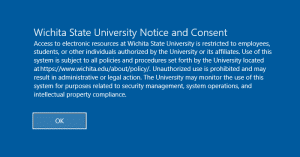
Access to electronic resources at Wichita State University is restricted to employees, students, or other individuals authorized by the University or its affiliates. Use of this system is subject to all policies and procedures set forth by the University located at https://www.wichita.edu/about/policy/. Unauthorized use is prohibited and may result in administrative or legal action. The University may monitor the use of this system for purposes related to security management, system operations, and intellectual property compliance.

Due to State of Kansas policy requirements, starting the weekend of July 2, a new log-on warning will be rolling out over the course of the weekend to all university devices

What is a log-on warning? Prior to logging onto any device on campus, a log-on warning will appear on the screen. The log-on warning defines that the system is monitored for improper use and directs users to read the acceptable use policy located at www.wichita.edu/aup. This does not impact the usage of the device and will appear before every log-on.

Who will get this message? All WSU-owned devices, including Apple macOS and Windows. There will be no change to NIAR’s warning as part of the deployment.

Why do we need this? The state policy has made log-on warnings a requirement among institutions and agencies. Additionally, this helps to ensure we meet compliance obligations undertaken by many areas of the university.

When will this happen? Starting July 2, the change will go into effect across campus. It may take a few days to appear on your WSU-owned device, or longer if you are off campus.

Have questions or concerns? Let us know @ askinfosec@wichita.edu

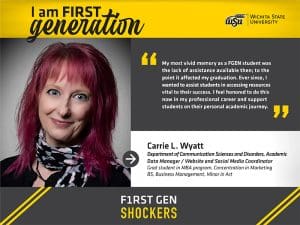
I am FIRST generation. Wichita State University. "My most vivid memory as a FGEN student was the lack of assistance available then; to the point it affected my graduation. Ever since, I wanted to assist students in accessing resources vital to their success. I feel honored to do this now in my professional career and support students on their personal academic journey." Carrie L. Wyatt Department of Communication Sciences and Disorders, Academic Data Manager / Website and Social Media Coordinator Ph.D. student in MBA program, Concentration in Marketing BS, Business Management, Minor in Art. F1RST GEN SHOCKERS.

What is a first-gen student? A first-generation college student is defined as a student whose parents/legal guardians have not completed a bachelor’s degree — a student who is the first person in their immediate family to attend a four-year college or university to attain a bachelor’s degree.

  • FORM-A-LINE: Become a subcommittee member of FGCC. The First-Generation Coordinating Council (FGCC) is looking for individuals to join in the work. Currently seeking subcommittee members for the following:
    • Marketing
    • Faculty and staff engagement
    • Data and assessment
    • Graduate school
  • FOCUS ON FIRST-GEN: This week we highlight Carrie Wyatt, who graduated with a bachelor of science in business management with a minor in art. Carrie is Wichita State’s Department of Communication Sciences and Disorders; academic data manager and website and social media coordinator.
  • F1RST-GEN T-Shirts are available in the RSC Shocker Store for $12.
  • If you’re interested in being featured as a first-generation profile, contact Lydia Santiago at fgshockers@wichita.edu.

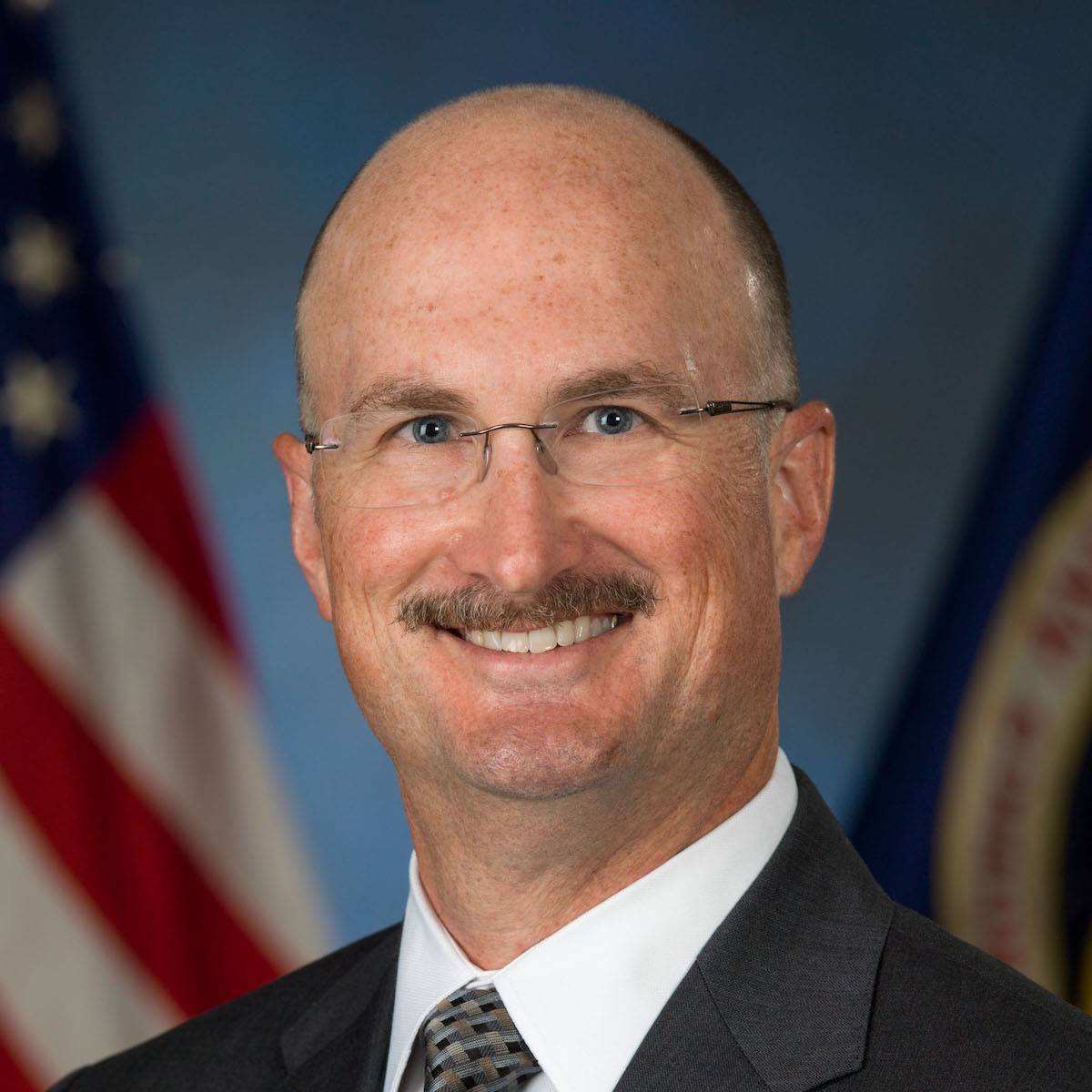
Tim Fisher

In 1977, a Wichitan watched Star Wars at the Wichita Mall theater on East Harry. He returned again and again that summer to watch the lightsaber battles, Jedi Knights and X-wing starfighters.

“I’m an original Star Wars guy,” Tim Fisher said. “I was just mesmerized. It sparked that ‘What is possible? What can we do?’”

Decades later, Fisher is one of the people helping answer those questions for the United States and the entire world in space. He is chief engineer for NASA’s Gateway program, part of the agency’s quest to return to the Moon and explore Mars.

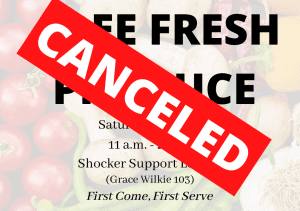
The food distribution that is scheduled for this upcoming Saturday, June 26 has been canceled. We recognize the inconvenience that the cancelation of this distribution will cause and sincerely apologize for that. The food drop-offs will be paused for the rest of the summer and will start again with the school year.

Other resources that students, staff, and faculty can utilize in the meantime include the Shocker Support Locker, the ICT Community Fridge, and Wichita State’s Community Garden.

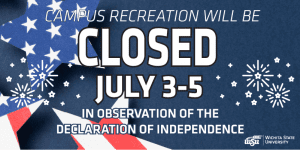
The Heskett Center will be closed July 3-5 in observance of the Independence Day holiday.

When the Make48 invention and maker challenge comes to Wichita State University on June 24, two of the eight Wichita teams are comprised entirely of Wichita State University students.

Team Baby Cactus consists of Juan Blasetti, junior in computer science; Jerome Teoh, a recent aerospace engineering grad; Grant Johnson, a freshman in computer engineering; and Katie Hefner, a senior in engineering technology and general business.

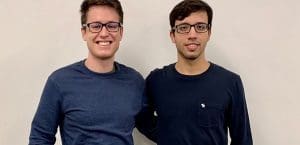
The second team — Veni, Vidi, Vici — is comprised of Felipe Lima de Oliveira, a junior in mechanical engineering; and Rafael Leite, a graduate student in mechanical engineering. Both Felipe and Rafael are from Brazil.

Joe Jabara doesn’t call his class Hacking 101, but his students do learn how to develop effective attacks on computer systems.

The course is actually called Applied Computing Intermediate Design Project, and this past spring its students carried out phishing attempts against a targeted group of Wichita State faculty, staff and students.

Working in teams, students created emails based on the same principles that hackers use to get recipients to open an email, click on a link and enter log in credentials. Student efforts were successful: Out of 128 targets, 40 opened a phishing email, 10 clicked on a link and four entered log in credentials.

Adding to its myriad points of pride, Wichita State University has been named the most affordable, LGBTQ-friendly college in the state. 

Student Loan Hero, a company that helps student loan borrowers make well-informed repayment decisions, took its statistics on the most affordable colleges and universities and paired it with information from Campus Pride, which developed an Index to examine LGBTQ acceptance on college campuses based on policies, administrative support, campus community involvement and other factors.