The Disaster Resilience Analytics Center (DRAC) will host an online panel discussion titled, “Disaster Preparedness and Emergency Management in South Central Kansas” from noon to 1 p.m. Friday, Nov. 10 via Teams.

In the face of hazards, disasters or emergency situations, communities respond in a variety of ways related to aspects of geography, population, communication patterns and available resources. Join the panel discussion featuring regional public safety and emergency response leaders with experience at national, state and community levels. They will provide insights and examples of current strengths and weaknesses as well as recommendations for enhancing community resilience in disruptive circumstances.

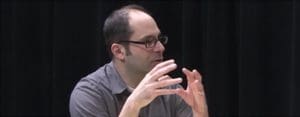
The panelists include Jaime Anderson, South Central and Southeast Kansas readiness and response coordinator for the Healthcare Coalition Partners of KS; Kyle Burtch, chief workforce officer of Sedgwick County Emergency Medical Services; Terry David, Rice County commissioner; and Dave Johnston, Reno County EMS chief.

The panel will be moderated by David Shinn: Working in the field of medicine since 2022, Shinn has established and maintained multiple organizations and companies in the fields of public safety, search and rescue, and professional education.

Headshot of Dr. Omar Sediek

Dr. Omar Sediek will speak as part of the Disaster Resilience Analytics Center (DRAC) seminar series from noon to 1 p.m. Thursday, June 22 via Zoom.

His talk will discuss the necessity of distributed computing for conducting cross-disciplinary research where field-specific computational models (simulators) are available, but have not been designed to work together. An example of this is natural hazards research. Simulators abound in the disparate fields that fall under this area (e.g. social science, engineering, economics and health), but little progress has been made to integrate the simulators to study overarching and cross-disciplinary disaster scenarios. The reason for slow penetration of this technology is the high barrier to entry, which requires extensive knowledge of computer science and programming. The talk will focus on a platform named Simple Run Time Infrastructure (SRTI) that address the issues mentioned above. Designed to provide a low barrier to use, SRTI v2 is developed for users with limited programming experience and designed to simplify and streamline a user’s effort to compose a distributed simulation and handle time management.

Dr. Sediek is a bridge engineer at Alfred Benesch & Company. He received his joint Ph.D. in civil engineering and scientific computing from the University of Michigan in Ann Arbor with specialization in seismic resilience of communities. He received his bachelor’s and master’s from Cairo University in Egypt. His research interests span from the stability of steel members to community resilience against natural hazards and the use of artificial intelligence in structural engineering.

Photo of Dalton Stanfield

Dalton Stanfield will speak as part of the Disaster Resilience Analytics Center (DRAC) seminar series from noon to 1 p.m. Friday, May 19 via Zoom. The presentation will late be available on the DRAC seminar series YouTube channel.

The talk, titled “Perspective, finding data in unusual places,” will draw upon the history of water on earth and man’s interaction with it. Examples to be discussed include; Florida, Houston, Lake Tulare and the Colorado River Basin. Each one of these case studies will be looked at for fundamental patterns, issues with past planning and how an ecologist could have predicted our current climate. From different perspectives we explore new ways to think about emergency situations and how perspective can lead us to effective but surprising solutions.

Stanfield grew up in Garden Plain, KS and then attended Wichita State, earning a bachelor’s in international business with a minor in economics and a bachelor’s in biological sciences with a minor in chemistry. He then attended Florida State university where he studied theoretical ecology and evolution and graduated with his master’s in ecology. Stanfield currently manages his own environmental consulting firm specializing on work with endangered species and the impacts of infrastructure projects.

Evolutionary epidemiologist Dr. Rob Wallace will speak as part of the Disaster Resilience Analytics Center from noon to 1 p.m. Friday, Dec. 2 via Zoom.

Wallace works at the Agroecology and Rural Economics Research Corps. He is the author of “Big Farms Make Big Flu” and the forthcoming “The Fault in Our SARS: COVID-19 in the Biden Era.” He has co-authored a number of technical volumes, including Neoliberal Ebola: Modeling Disease Emergence from Finance to Forest and Farm and Clear-Cutting Disease Control: Capital-Led Deforestation, Public Health Austerity, and Vector-Borne Infection. He has consulted for the U.S. Centers for Disease Control and the Food and Agriculture Organization of the UN.

Julie Stimson, Sedgwick County emergency management director, will speak on “Disaster Recovery: The forgotten phases of disaster” as part of the Disaster Resilience Analytics Center’s seminar series from noon to 1 p.m. Nov. 8 via Zoom.

The disaster occurred, the initial response is done, and all of the news cameras moved on to other stories of interest. A wide range of behind-the-scenes work is still done in the days, weeks, months, and even years following a major disaster. Recovery efforts focus on how to best restore, redevelop, and revitalize the health, social, economic, natural, and environmental footprints of a community. The National Disaster Recovery Framework provides context on how the whole community works together to get back on its feet and rebuild stronger, smarter, and safer, the challenge is that not many community leaders nor the public are aware of what recovery looks like.   The recovery phase of disasters rarely captures the attention it deserves.  It is in the recovery phase that communities can maximize risk mitigation efforts and truly build resilience for future events.

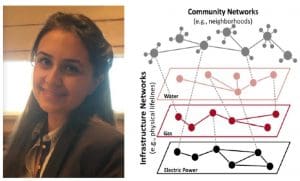
Speaker image and representative image of research covered in the talk.

Deniz Berfin Karakoc, a Ph.D. student from the University of Illinois at Urbana-Champaign, will speak as part of the Disaster Resilience Analytics Center Seminar Series from noon to 1 p.m. Friday, Oct. 28 via Zoom.

In Karakoc’s work, she studies the restoration planning of critical interdependent infrastructure networks after a disruptive event by emphasizing the social vulnerability indices of interacting socially.

Karakoc earned her master’s degree in industrial and systems engineering from the University of Oklahoma, and a bachelor’s degree in industrial engineering from Bilkent University in Turkey. Deniz is currently a Ph.D. student in civil and environmental engineering at the University of Illinois at Urbana-Champaign.

Faculty and staff are invited to watch the next edition of the Disaster Resilience Analytics Center Seminar Series featuring Dr. George Dehner, associate professor Wichita State Department of History  associate professor, noon-1 p.m. March 4 via Zoom. The presentation is titled “Translating Science into Decisions: Influenza Pandemics in the late 20th and early 21st Centuries.”

During the presentation, Dehner will discuss how the sciences and policymakers play complementary roles in crafting public health responses. While often acting harmoniously, because of the differences in assessing risk and crafting recommendations, there can be friction in the process of decision-making. By examining influenza pandemic responses—notably the 1976 Swine flu pandemic and the Novel Influenza A (H1N1) Pandemic in 2009—it is apparent there was discordance between researchers and policymakers in crafting policy responses.

Dehner is a world environmental historian who examines the intersection of humans and disease in the modern era. His first book “Influenza: A Century of Science and Public Health” was published in April 2012 by the University of Pittsburgh Press. His second book “Global Flu and You: A History of Influenza” was published in December 2012 by Reaktion Press. His article “WHO Knows Best? National and International Responses to Pandemic Threats and the ‘Lessons’ of 1976” was published in the Journal of the History of Medicine and Allied Sciences. The article received the 2011 Margaret T. Lane/Virginia F. Saunders Memorial Research Award by the American Library Association Government Documents Roundtable.

Dehner is currently working on a research project on Legionnaires’ Disease. Dehner has recently presented his perspectives in “Influenza pandemics since Russian Flu: Do they provide insight to COVID-19?” as part of a Fairmont College of Liberal Arts and Sciences series, Perspectives on the Pandemic.

The meeting will be recorded and the recorded video will be posted on YouTube.

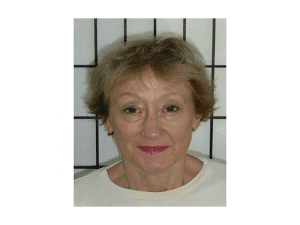
Picture of Dr. Specht.

Faculty and staff are invited to watch the next edition of the Disaster Resilience Analytics Center Seminar Series featuring Dr. Alison Specht noon-1 p.m. Feb. 18 via Zoom. The presentation is titled “Achieving Open Science Outcomes with Multi-Faceted Teams: Learning from the Coalface.” Specht is an environmental scientist with broad expertise in research, teaching and community engagement.

In the past 10 years, Specht has focused on facilitating interdisciplinary groups to tackle complex environmental problems using existing data. Specht’s major interests, apart from her domain activities, are to enhance collaboration between scientists, policy-makers and managers to improve environmental outcomes and improve data management and preservation, data sharing and re-use.

During the presentation, Specht will discuss how a researcher can identify good quality data and code for use, give examples of the use of infrastructures of various sorts that may assist a research team to achieve their goal, how a project can be best presented within the academic community to ensure commentary and uptake, and how the participant can most benefit from engaging in the open-access world.

The next presentation of Wichita State’s Disaster Resilience Analytics Center (DRAC) seminar series will take place noon-1 p.m. today, Nov. 19 via Zoom. During the event, Dr. Zelalem Demissie will present his seminar titled “An Integrated Time-Series Surface Deformation Analysis Using INSAR, GNSS and NLDAS Data.”

Dr. Demissie will present the results of his investigations of the 2020 Wichita area earthquakes using observations obtained from Remotely Sensed Interferometric Synthetic Aperture Radar (InSAR), Global Navigation Satellite System (GNSS) and North American Land Data Assimilation System (NLDAS).